Hello!

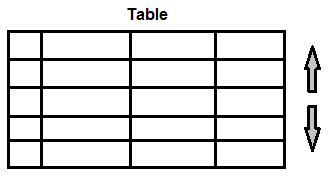
I would like to be able to change the sequence of rows in the JTable by clicking on arrows, which will be placed on the right side of the JTable.

Please, see an attached file to understand the idea.

Well, could someone please give me some advices on how to implement it?

Thanks!
Dani AI

Generated

Good job, — the direction you took is sound. Below are practical, non-duplicating tips to make row reordering robust in real apps (sorting/filtering, selection, threading and performance).

Keep the reorder logic in the model

  • Manipulate the model's backing collection (List/Vector) rather than trying to shuffle view widgets. For a simple shift you can use list remove/add or Collections.rotate on the backing list. Notify the table with targeted TableModel events instead of forcing a full refresh so renderers, cell editors and the RowSorter are disturbed as little as possible.

Handle view vs model indices

  • If the table can be sorted or filtered, translate selection and destination positions between view and model with JTable methods before and after the move. This prevents moving the wrong element when a TableRowSorter is active.

Sorting, filtering and user intent

  • If the goal is a user-controlled visual order, temporarily disable or clear sorter keys while reordering, or make the reorder operate on the underlying data that the sorter uses. Otherwise the active sort will immediately re-order the view and hide the change.

Threading, selection and edge cases

  • Do all model mutations on the Event Dispatch Thread (see Swing concurrency guidelines). After the change, restore selection by translating model index back to view. Test boundary cases (first/last row, multi-selection, empty model) and consider keeping a stable ID in each row object so identity does not depend on index.

References: JTable javadoc (index translation) and TableRowSorter behavior, and the Swing concurrency tutorial for EDT/updates.

Probably, I must use TableModel... Could someone please provide me some conceptual explanation of the steps to be done?

Well, I've found some ways to solve the problem. I must use "moveRow" method of DefaultTableModel. However, the new problem is that I have (and really need) AbstractTAbleModel... What should I do in this case?

I've solved the problem. The code for MOVE_UP button is shown below:

JButton butUp = new JButton(new ImageIcon("src/icons/ok.png"));
        butUp.addActionListener(new java.awt.event.ActionListener() {
        public void actionPerformed(java.awt.event.ActionEvent evt) {
                 int selRow = attrTable.getSelectedRow (  ) ;
 
                 int direction = MOVE_UP;
                 int destRow = selRow + direction;

                if  ( (destRow  >= 0) && (destRow < attrTable.getRowCount()) )   {
                   tableModel.moveRow ( selRow, selRow, destRow ) ;

                   attrTable.setColumnSelectionAllowed (false);
                   attrTable.setRowSelectionAllowed(true);
                   attrTable.setRowSelectionInterval (destRow, destRow) ;

                   attrTable.repaint (  ) ;
                }
            }
        });
private class QTableModel extends AbstractTableModel {
...
      public void moveRow(int start, int end, int to) {
         int shift = to - start;
         int first, last;
 	 if (shift < 0) {
             first = to;
             last = end;
         }
 	 else {
             first = start;
             last = to + end - start;
         }
         rotate(cache, first, last + 1, shift);
         fireTableRowsUpdated(first, last);
     }

      private void rotate(Vector v, int a, int b, int shift) {
        int size = b - a;
        int r = size - shift;
        int g = gcd(size, r);
	for(int i = 0; i < g; i++) {
          int to = i;
          Object tmp = v.elementAt(a + to);
	  for (int from = (to + r) % size; from != i; from = (to + r) % size) {
             v.setElementAt(v.elementAt(a + from), a + to);
             to = from;
          }
         v.setElementAt(tmp, a + to);
         }
      }

      private int gcd(int i, int j) {
        return (j == 0) ? i : gcd(j, i%j);
      }
}
Be a part of the DaniWeb community

We're a friendly, industry-focused community of developers, IT pros, digital marketers, and technology enthusiasts meeting, networking, learning, and sharing knowledge.