iPad shopping website FAIL?

happygeek 1 Tallied Votes 612 Views Share

The iPad is, as those annoyingly creative TV adverts show us, used for all sorts of things by all sorts of people. However, according to a press release that hit the DaniWeb news desk today, you might be forgiven for thinking that shopping isn't one of them. As usual though, the devil is in the detail.

The press release exclaimed that the Apple iPad was failing to be used by online shoppers and went on to reveal that a nationwide study of consumer habits in the UK had shown that Brits are not embracing tablets for online shopping and claimed that "only 4 percent of Brits are using a tablet for online shopping".

It pays to read on though, as the research wasn't actually showing that people with iPads don't use them to shop, but rather that the majority of people shopping online don’t actually own a tablet. And that's something altogether different.

The survey, commissioned by ecommerce site builder Basekit, is revealing in that it does show that currently the British are not embracing mobile shopping as much as might be expected given the amount of hype surrounding tablet and smartphone usage.

Here's what the research really discovered:

42 percent of Brits still do their online shopping from a Windows-based PC, and 42 percent from a Windows-based laptop. Only 9 percent use an Apple Mac, with laptops twice as popular as desktops in this regard.

4 percent of Brits are using a tablet to shop, and 76 percent of that 4 percent (are you still with me?) are using an Apple iPad. That works out to about 3.3 percent, or put another way almost the same number (3.7 percent) who use an Apple Mac desktop.

Only 2 percent of Brits use a smartphone to shop, with the Apple iPhone dominating this sector as well with 66% of that 2 percent share.


So, if you are thinking about developing an ecommerce site should you take tablet and mobile users into account? The above figures would seem to suggest not, but by not doing so you are still blocking an admittedly small number of potential shoppers and potential profit for the retailer. And it's a potential user-base that is growing year on year. As Juan Lobato, CEO at Basekit, says "With this research, we’re hoping to help UK online retailers and website developers make sure that their websites work hard for them. We don’t believe that many retailers need to rush into creating Apple iPad or Android phone applications as our research shows that Brits aren’t currently shopping through these as a general rule. However, we want to make sure that UK retailers are making informed decisions about their online footprint".
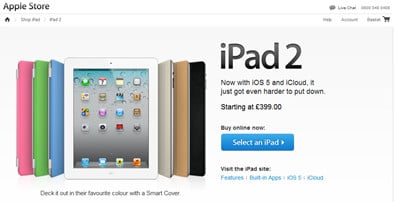
frankowens commented: ipad 2 +0

Dani AI

Generated

Good point from — survey headlines can confuse device ownership with shopping behaviour. That subtlety matters, but it’s the wrong debate to stop at “tablet vs desktop.” As ’s comment shows, many users still prefer desktop for complex tasks; others use phones or tablets for discovery, comparison or quick buys. The practical question for an ecommerce team is simple: which device paths are actually losing conversions, and how cheaply can those paths be fixed?

Practical, prioritized checklist (actions that move revenue)

  • Design responsive, mobile‑first checkout funnels and progressively enhance for larger screens.
  • Fix speed first: measure with Lighthouse / PageSpeed Insights, reduce payloads, lazy‑load images and defer nonessential scripts.
  • Simplify checkout: show total cost early, make guest checkout obvious, minimize fields and combine split fields (single phone, single name).
  • Form UX: place labels above fields, avoid disappearing inline labels, provide inline help and clear error messages.
  • Touch and layout: use minimum hit areas (Apple recommends ~44×44pt; Material recommends ~48×48dp) and spacing so taps aren’t missed.
  • Reduce typing: use proper input types (email, tel, autocomplete attributes) and offer one‑tap wallets (Apple Pay / Google Pay) where possible.
  • Consider a PWA if you need an app‑like, fast installable experience without building native apps.

Example snippets (small, high‑impact fixes)

<meta name="viewport" content="width=device-width,initial-scale=1">
<input type="tel" name="phone" autocomplete="tel" inputmode="tel">
<input type="email" name="email" autocomplete="email">

Optimize, test, measure — then iterate. Run Lighthouse audits and real‑device sessions, segment conversions by device in analytics, A/B test checkout variants (guest vs forced login, single‑page vs multi‑step), and use a device cloud (BrowserStack or similar) for cross‑device verification. That way the thread’s practical concern — “do I need to support tablets/phones?” becomes a revenue question with an answer: yes, where the data shows avoidable friction. (blog.google)

Mughal24632 0 Newbie Poster

hi, brother, last week search a good website ipad sale and buy site. i like it.

kapildeven89 -1 Light Poster

Nice Information about ipad. Thanks for your topic, It gives me a great help to bring a ipad.

Ancient Dragon 5,243 Achieved Level 70 Team Colleague Featured Poster

I have both a Samsung tablet and an iPod, use neither for online shopping, always use my Windows 7 PC because its easier. I have seen a few (very few) people using tablets while shopping, most likely to do price comparisons or look at their shopping list.

yuvastyle 0 Newbie Poster

I am a big friend of iPad and here really nice information regarding it. Really helpful for iPad shopping.

CaptBah 0 Newbie Poster

Looking at the available Apps for online shopping and not seeing a hole lot out their. maybe if the Apps were their and got a hole lot faster,more flok's would be using them to shop.

CaptBah 0 Newbie Poster

I am still looking for a tablet. I just can't
decide Pc or Apple.

Ancient Dragon 5,243 Achieved Level 70 Team Colleague Featured Poster

If you buy Apple you will pay too much money. They're overpriced.

Be a part of the DaniWeb community

We're a friendly, industry-focused community of developers, IT pros, digital marketers, and technology enthusiasts meeting, networking, learning, and sharing knowledge.