Hi everyone,

I’ve been exploring different career paths in the tech and marketing space, and digital marketing seems to be one of the fastest-growing fields right now. Many companies are focusing heavily on online marketing, SEO, paid ads, and social media to reach customers.

Some important topics beginners should learn include:
Search Engine Optimization (SEO)
Google Ads / PPC Campaigns
Social Media Marketing
Content Marketing & Blogging
Email Marketing
Google Analytics and Search Console
Real-time projects and campaign management

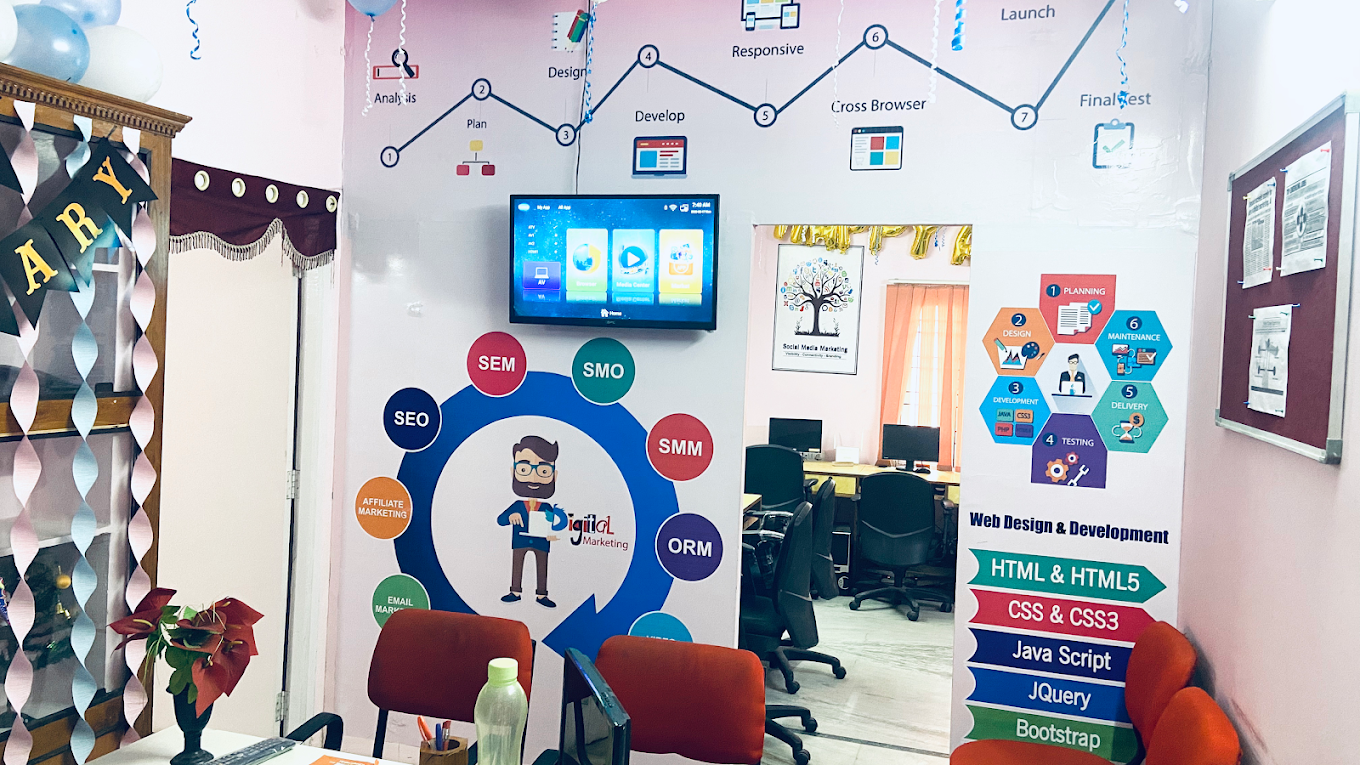
In Hyderabad, I came across Elearn Infotech, which offers digital marketing training covering SEO, Google Ads, social media marketing, and analytics with practical assignments.

However, I’d like to get suggestions from the community here.

A few questions for experienced marketers and developers:
Which digital marketing skill should beginners focus on first — SEO or paid ads?
Are hands-on projects more important than certifications?
What tools should beginners start learning in digital marketing?

Looking forward to hearing your thoughts and advice.

Thanks!
Recommended Answers

All 8 Replies

Wait, isn't that your company?

image_2026-03-08_213107638.png

Hey,
In my opinion, beginners should start with SEO before moving to paid ads. SEO helps you understand how search engines work, how keywords are used, and how websites appear in search results. When you have a good understanding of these basics, learning paid advertising platforms like Google Ads becomes much easier.
When it comes to building a career in digital marketing, practical experience is usually more valuable than certificates. Certifications can look good on a resume, but employers often prefer people who have actually worked on real websites or campaigns. If you have experience doing keyword research, writing optimized content, or helping a website improve its rankings, that shows real skills.When it comes to building a career in digital marketing, practical experience is usually more valuable than certificates. Certifications can look good on a resume, but employers often prefer people who have actually worked on real websites or campaigns. If you have experience doing keyword research, writing optimized content, or helping a website improve its rankings, that shows real skills.
For beginners, it’s also important to learn some basic tools used in the industry. Tools like Google Analytics help you understand how visitors interact with a website and where the traffic is coming from. Google Search Console is useful for checking how a site performs in search results and for identifying technical issues. It’s also helpful to explore SEO tools such as SEMrush or Ahrefs to learn keyword research and competitor analysis.
Overall, the best way to learn digital marketing is to start with the basics and keep practicing. Try working on small projects, experiment with different strategies, and gradually build your experience. The more you practice, the more confident and skilled you will become.

In 2026, beginners should focus on practical skills, not just certificates. Start by learning SEO, social media, content creation, paid ads, email marketing, and analytics. Use ai tools to work smarter, practice with real project and keep updating your knowledge because digital marketing changes fast. The key is to learn, test and improve with real results.

Pick one skill and start there, not everything at once. SEO, paid ads, social media marketing, email marketing, pick whichever aligns with what interests you most and go deep on it for three to four months before touching anything else.

Free resources are genuinely enough to start. Google's own courses, YouTube channels of practitioners actually doing the work, and just experimenting on a small personal project or helping a local business for free.

That last part matters most. Real experience on an actual project teaches more than any course. Get one result you can show people and everything gets easier from there. Stop collecting courses, start applying what you learn within the first week. Execution beats preparation every time.

I'd start with SEO because it teaches you how search engines work, how people search, and how to create content that actually gets found. Once you understand those fundamentals, learning paid ads becomes much easier.

Hands-on projects are definitely more valuable than certifications. Employers and clients are usually more interested in seeing real results than a certificate.

As for tools, I'd focus on Google Analytics, Google Search Console, Google Ads, and a keyword research tool like Ahrefs or Semrush. Even a simple personal website or blog is a great way to practice everything you're learning.

One lesson I've learned is that sustainable growth comes from understanding your audience and consistently creating value. AI can speed up many tasks, but strategy, creativity, and critical thinking remain essential.

If anyone is looking for guidance on SEO, content strategy, AI-powered digital marketing, or website growth, I'm happy to share what has worked in real-world projects and answer questions here in the discussion.

I'd also love to hear how others recommend beginners get started in 2026.

If you're just starting with digital marketing in 2026, don't try to learn everything at once. The field is broad, and focusing on the fundamentals first will help you build a strong foundation.

Here's a simple roadmap that works for most beginners:

  • Learn how search engines work and understand the basics of SEO.
  • Get familiar with content marketing and practice writing helpful, user-focused content.
  • Explore social media marketing by creating and managing a few posts on platforms like Instagram and LinkedIn.
  • Learn the basics of paid advertising (Google Ads and Meta Ads), even if you start with a small budget.
  • Understand email marketing, lead generation, and marketing funnels.
  • Spend time with AI tools such as ChatGPT, Canva AI, and other automation platforms. In 2026, knowing how to use AI effectively is becoming an important marketing skill rather than an optional one.
  • Create your own website or blog and apply everything you learn through real projects. Practical experience is far more valuable than only watching tutorials.

One piece of advice I'd give every beginner: focus on solving real business problems instead of chasing algorithms or viral hacks. Companies hire marketers who can generate leads, improve conversions, and grow revenue—not just increase likes or followers.

If you're looking for practical guidance, templates, or help building a digital marketing strategy for your business, I regularly share resources and also help businesses with SEO, WordPress websites, performance marketing, and lead generation through Digifyy. Feel free to check it out if you think it could be useful.

Good luck with your learning journey—digital marketing is constantly evolving, but it's one of the most rewarding skills you can develop if you keep learning and practicing consistently.

If you're just starting with digital marketing in 2026, don't try to learn everything at once. The field is broad, and focusing on the fundamentals first will help you build a strong foundation.

Here's a simple roadmap that works for most beginners:

  • Learn how search engines work and understand the basics of SEO.
  • Get familiar with content marketing and practice writing helpful, user-focused content.
  • Explore social media marketing by creating and managing a few posts on platforms like Instagram and LinkedIn.
  • Learn the basics of paid advertising (Google Ads and Meta Ads), even if you start with a small budget.
  • Understand email marketing, lead generation, and marketing funnels.
  • Spend time with AI tools such as ChatGPT, Canva AI, and other automation platforms. In 2026, knowing how to use AI effectively is becoming an important marketing skill rather than an optional one.
  • Create your own website or blog and apply everything you learn through real projects. Practical experience is far more valuable than only watching tutorials.

One piece of advice I'd give every beginner: focus on solving real business problems instead of chasing algorithms or viral hacks. Companies hire marketers who can generate leads, improve conversions, and grow revenue—not just increase likes or followers.

If you're looking for practical guidance, templates, or help building a digital marketing strategy for your business, I regularly share resources and also help businesses with SEO, WordPress websites, performance marketing, and lead generation through Digifyy. Feel free to check it out if you think it could be useful.

Good luck with your learning journey—digital marketing is constantly evolving, but it's one of the most rewarding skills you can develop if you keep learning and practicing consistently.

Be a part of the DaniWeb community

We're a friendly, industry-focused community of developers, IT pros, digital marketers, and technology enthusiasts meeting, networking, learning, and sharing knowledge.