CIA LulzSec hack attack is no laughing matter

happygeek 1 Tallied Votes 655 Views Share

According to reports, the LulzSec hacking group has claimed responsibility for a denial of service hack attack on the cia.gov website resulting in it being inaccessible for a while late yesterday.


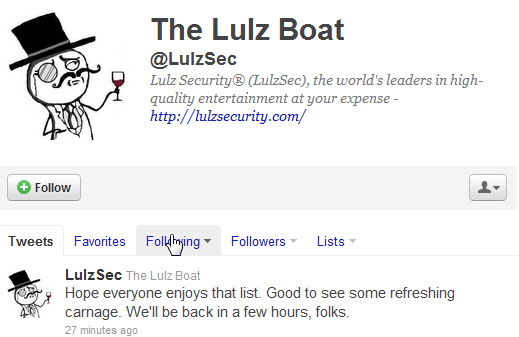
LulzSec appears to have taken up the baton of high profile hacking from the Anonymous group in recent weeks, with attacks being reported to have hit the Senate, News Corp, Sony and even the UK National Health Service. Yet all these hacks have one thing in common: they all seem to be aimed at getting media exposure as much as anything else.

It could also be argued that they are exposing serious security shortcomings in web-based operations that really should know better, and certainly the likes of the Senate and CIA sites fall into that category. However, the light-hearted approach to the serious matter of hacking, with 'humorous' Tweets announcing them and claiming responsibility, have led to some security analysts to ask if LulzSec are just in it for laughs?

Not that the FBI is laughing, LulzSec members are currently wanted by the Feds for their activities which, at the end of the day, are in breach of the law no matter how much the group may want to paint themseleves as hacktivist pranksters.

The general public, however, would appear to get the funny side of the hacking according to a new survey from security outfit Sophos. When asked if they found "LulzSec’s activities amusing" an astonishing 56.85 percent of those asked thought they were. Only 39.74 percent thought it was funny and deserved though, with 17.12 percent thinking it amusing but not approving of the hacks nonetheless. Only 43.14 percent thougth hacking into corporate sites and launching DDoS attacks were no laughing matter.

"While some people think this is a fun game that can also help point out corporate security weaknesses, the truth is that companies and innocent customers are - in the worst cases - having their personal data exposed," said Graham Cluley, senior technology consultant at Sophos. "There are responsible ways to inform a business that its website is insecure, or that it has not properly protected its data. What's disturbing is that so many internet users appear to support LulzSec. You have to ask yourself if LulzSec has finally bitten off more than it can chew. After all, they've just poked a very grizzly bear with a pointy stick. LulzSec's cockiness may be their undoing," added Cluley.
Dani AI

Generated

raised the right concern: publicity-driven incidents can look like "pranks" but they expose real operational and privacy risk. This short expert note focuses on practical, verifiable steps operators and small IT teams can apply now, plus a quick correction to a common misconception raised by . It does not repeat the external articles already cited in earlier posts.

Start with visibility and an incident playbook. Baseline normal traffic (NetFlow/sFlow), set automated alerts for sudden rate or connection-growth, and keep time-synced logs. For network-level protection, arrange upstream filtering with your ISP, use an anycast/CDN front end or a scrubbing provider for volumetric events, and implement rate-limiting and connection caps at the edge. On hosts and apps, enable a WAF, enforce short connection timeouts, apply SYN-cookie or TCP tuning to protect the stack, cache aggressively, and remove or throttle expensive endpoints. Preserve sampled packet captures and immutable logs for forensic review—full-pcap for long periods is costly, so sample intelligently.

To clarify : consumer routers cannot safely "capture and return" attack packets. Source-address spoofing, routing asymmetry, and protocol constraints make that approach impractical and likely to cause collateral damage. Effective alternatives are ingress/egress filtering, BGP-level mitigations (blackholing or traffic engineering via your provider), and cooperation with upstream carriers or specialized mitigation services.

Operational hygiene prevents escalation. Keep software patched, enforce MFA and least privilege, disable unused admin interfaces, run periodic pen tests or bug-bounty checks, and rehearse tabletop incident responses. Preserve evidence, document timelines, and have abuse/contact numbers ready for your provider and legal counsel. Public attention does not make an attack harmless; disciplined monitoring and layered defenses are what stop outages and data loss.

IT Speclist007 0 Newbie Poster

Too bad our routers are not designed to capture the packets and return them to the sender

jingda 135 Industrious Poster Featured Poster

One of the hackers was arrested.

Be a part of the DaniWeb community

We're a friendly, industry-focused community of developers, IT pros, digital marketers, and technology enthusiasts meeting, networking, learning, and sharing knowledge.