My subscription to Norton was up so I looked on this to see what would be good for free. Now the following is not unethical but it is still funny how there is a price for the rich and a price for the poor. I went to Avast and it had the free protection and the premium protection for $49.95.

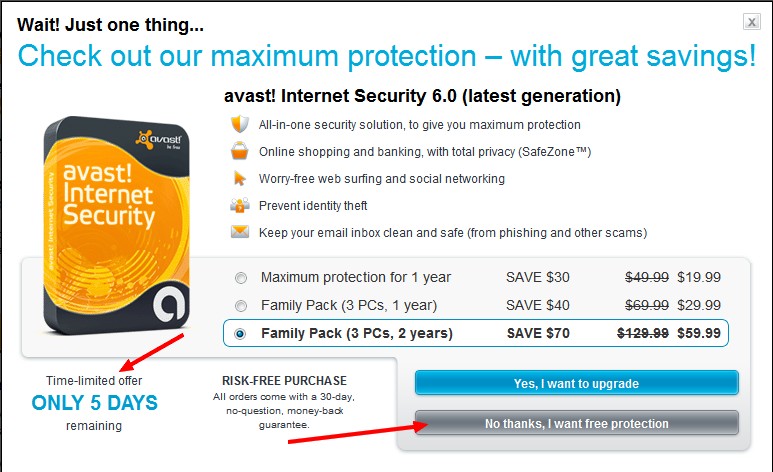
Now I guess the people who have plenty of money will just pick out the premium protection. I like to look at all of my options. Now when I clicked on the information about the free protection, it has a box that pops up. I guess they figure that these are the people who do not have a lot of money. The box offers you the $49.95 premium protection for $19.95 since you cannot afford the full price. I had never seen this before and found it interesting.

Dani AI

Generated

raised a useful observation about seeing a lower price only after choosing the free product, and is correct that discounts are common. What this thread is really describing is a standard commercial upsell: vendors present different pages or timed offers to convert a free-user into a paying customer. That behavior is widespread across software categories and is driven by simple marketing and UX goals rather than any technical trickery.

A few practical notes on why it happens and what to watch for: vendors often use landing-page logic, limited-time discounts or exit-intent offers to raise conversion rates. The same product can appear at full price on a direct “buy” page while a special promotional path is shown to visitors who first choose the free option. This is normal marketing, not a sign that the product is invalid or that the company is acting fraudulently.

Advice for choosing between free and paid protection: compare feature sets (real-time scanning, web/browser protection, anti-ransomware, firewall, support, multi-device licensing), check performance impact on the system, and confirm renewal terms and pricing in the EULA. Use trial periods where available and test on the actual machine to see resource use and false positives. Independent lab results and long-term reputations are helpful evaluation inputs when available.

Safety and purchase tips: obtain installers only from the vendor’s official site over HTTPS, avoid third-party bundles, read the privacy policy to understand data collection, and note renewal dates so surprise charges are avoided. In short, free AV is often adequate for casual use; paid suites pay off when extra features, support, or multi-device coverage are needed. This perspective complements ’s observation and ’s note about routine sales.

Recommended Answers

All 3 Replies

=GoodLuckChuck;1496771= The box offers you the $49.95 premium protection for $19.95 since you cannot afford the full price. I had never seen this before and found it interesting.
Not sure why you would find this "interesting" or unusual. Software companies have items on sale all the time.
I just purchased a photo editing program whose regular price is $90 and I got it on sale for $50. I bought it last week, this week the price is back to the normal $90.
Nothing unusual at all. Virtually ALL av programs offer their different paid version on sale, multiple times a year.
If you look at the Avast Pop up, the offer is good for 5 days.
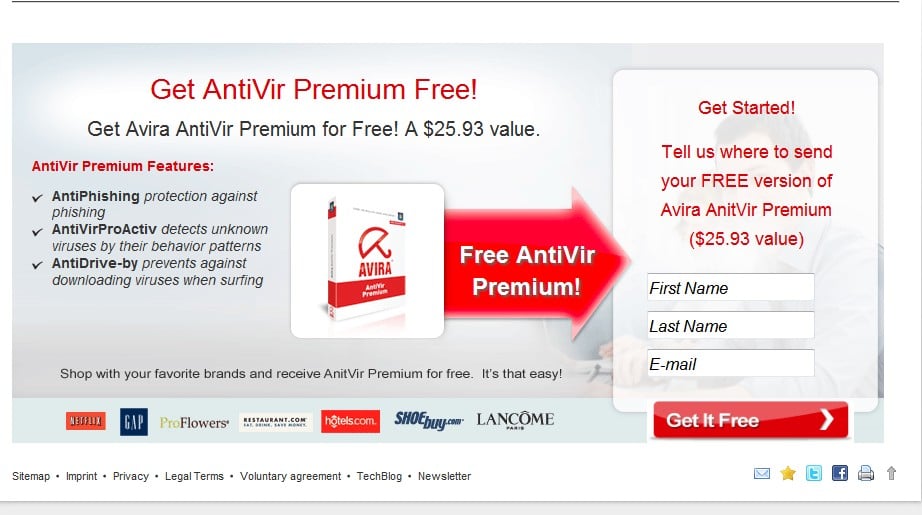
Go to Avira AV web page http://www.avira.com/en/avira-free-antivirus and compare Free and Paid and choose the free version you will also get a similar offer. So nothing unusual at all.

But the sale was not available when you click on the premium one. It does not say get it at the sale price while it lasts. It was the regular price of $49.95 at the same time as the sale price. But you only get the sales price if you decide that you want the free version and click on the free version.

You only see the above if you click on the free version, not that version. That is like a salesman giving you one price and lowering when you say "no." Although I guess this is how it works when they sell cars. I guess that this is the internet version of haggling. Bargaining or haggling is a type of negotiation in which the buyer and seller of a good or service dispute the price which will be paid and the exact nature of the transaction that will take place, and eventually come to an agreement.

But the sale was not available when you click on the premium one. It does not say get it at the sale price while it lasts. It was the regular price of $49.95 at the same time as the sale price. But you only get the sales price if you decide that you want the free version and click on the free version.

LOL! Well of course it wouldn't be available if you choose the premium version originally. If purchaser is more than willing at the start to pay $49.95, and he is because he clicked the Buy Now button, then why would they say, "oh heck, you can have it cheaper." No, they want new paying customers and additional paying purchasers for the future, so they give the reduced price offer to somebody who wants the Free version, then next year when renewal time comes around the person is more likely to purchase again and this year they have made $19.95 more than they would have made if the person took the Free version. There truly is nothing odd or unusual about it at all nor is it false business practice either. Many people shop this way, "I like the looks of your paid version, but give me a deal to try it". So they do. Nothing wrong or shady about it.

Be a part of the DaniWeb community

We're a friendly, industry-focused community of developers, IT pros, digital marketers, and technology enthusiasts meeting, networking, learning, and sharing knowledge.