BlackBerry 6 OS Revealed, Debuting Aug. 12 on BlackBerry Torch

PCBrown 0 Tallied Votes 470 Views Share

Research In Motion (RIM) held an event in NYC at 11 AM EDT today to announce a new device previously referred to as the BlackBerry 9800, but now known as the Blackberry Torch. The real excitement however is the BlackBerry 6 OS. RIM hopes that their revamped focus on multimedia and the web will reinvigorate interest in BlackBerry.

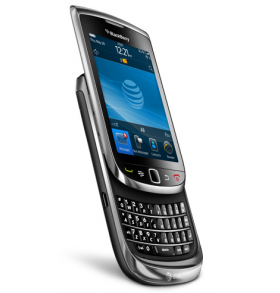
BlackBerry Torch 9800

- Features BB OS 6 - 624 MHz Processor - 512MB of RAM - Rear-facing Camera and Flash - 3.2" HVGA+ touchscreen (480x360) and QWERTY slider keyboard - 512MB built-in memory + 4GB eMMC card (expandable up to 32GB) - AccelerometerAT&T Details - Arrives August 12 - AT&T Exclusive In the Beginning - $199 with 2-year contract - Data plan required. $15/200MB or $25/2GB [ Torch Website ]

BlackBerry 6 OS
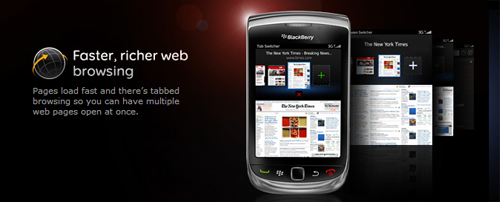
- Tabbed WebKit browser.
- Social media feed.
- Media can be sorted into folders and potos will be tagged with geolocation data.
- Users can carry a record of their entire media library and tage items on the go for WiFi syncing in the future.
- Universal Search. Parse all data on phone, app-specific items, and web search, all in one place.
- AppWorld store supports various pricing models.
- Apps can be built with HTML5 or CSS. Browser based apps will integrate with OS on par with Java apps.
- Billing is handled through your AT&T monthly bill.
- Supported File Formats: Windows Media DRM 10 for music & video Video format support: MPEG4, H.263, H.264, WMV3 Audio format support: MP3, AMR-NB, AAC-LC, AAC+, eAAC+, WMA, WMV, Flac, Ogg Vorbis

RIM's Hail Mary

There is no doubt that RIM has upped the ante with their new OS. The lessons they've learned from the success of the iPhone and Android have paid off. There is no word on Flash support yet, and the likelyhood that previous BlackBerry models will be able to upgrade looks slim.

Media management and the flexibility of the AppWorld store seem to be the biggest features of the redesign. RIM has opened the floodgates for new app developers by allowing HTML and CSS apps. With official support and full OS integration for browser-based apps, users will have access to a potential downpour of choices from every corner of the app world.

Check out the video below for an in-depth look into the new OS. Stay tuned for further coverage of the Torch and the BlackBerry 6 OS.
[youtube]Zs2ATfHyc84[/youtube]

UPDATE: Hands on from Engadget
[youtube]vCpFHFULOZc[/youtube]
Dani AI

Generated

Nice concise summary by — a few clarifications and follow-ups that thread replies haven’t covered in detail.

RIM’s shift to a WebKit-based browser and the WebWorks/HTML5 app model was more than UI polish: it was a deliberate developer pivot to let web devs target BlackBerry with JavaScript/CSS/HTML while exposing device APIs through a WebWorks layer. That opened the platform to non-Java developers but also created new expectations (and new limits) for performance and integration. (adtmag.com)

On upgrades: despite early doubts, RIM did publish OS6 updates for a limited set of older phones (examples include some Bold, Curve and Pearl 3G models and the Style), but carrier-by-carrier rollout timing varied widely — some regions waited months for an update. If you’re asking about the UK, some OS6-era Curve models hit UK carriers shortly after the Torch launch; carrier pages were the best place to watch for exact availability per model. (en.wikipedia.org)

About Flash and real-world browsing: reviews at the time noted that OS6 phones did not ship with full Adobe Flash support, so many Flash-dependent pages/videos wouldn’t render on the Torch and similar handsets; RIM’s tablet (PlayBook) later shipped with full Flash support. In short: better HTML/JS support, but Flash was effectively not available on most OS6 phones. (mobiletechreview.com)

Practical notes for developers and curious buyers:

  • Developers: use BlackBerry’s WebWorks SDK and test on the weakest target device you intend to support; profile memory and JS-heavy UI code, and prefer progressive enhancement over heavy DOM manipulation.
  • Packaging: follow the WebWorks tooling for device builds and test both simulator and real-device performance.
  • Users: if buying for work, confirm BES/BES10 compatibility with your IT team; if buying for web media, remember many legacy mobile sites used Flash or heavy JS that may not perform well. (mobileworldlive.com)

These points expand on the original coverage and the early reactions in this thread — useful context if someone reading this later is deciding whether to target OS6-era BlackBerrys as users or as an app platform. (macrumors.com)

tz2010 -1 Newbie Poster

very nice blog.
i ahve accepted you blog informations.

UrbanKhoja 89 Practically a Posting Shark Featured Poster

No word on when this will be released in the UK I'm guessing?

PCBrown 8 Junior Poster in Training

No announcements on a UK release, yet.

Agilemind 0 Posting Whiz in Training

Thank goodness BB is pushing the web-based apps. The internet is where cell phones ought to be going, once cloud computing gets going internet is all your going to need for anything and everything.

Be a part of the DaniWeb community

We're a friendly, industry-focused community of developers, IT pros, digital marketers, and technology enthusiasts meeting, networking, learning, and sharing knowledge.