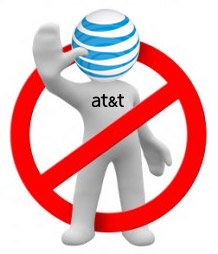
The term Net Neutrality has been the subject of heavy discussion for the past several years. The freedom to go where and when we want to on the internet is about to slip away. Big telecoms and internet giants like AT&T, Comcast, Verizon, Time Warner and even Google have met with the government and came up with a set of rules that will allow them to regulate and prioritize what we see on the internet (to say the least).
Yesterday Steve Wozniak, the engineer that co-founded Apple Computer, Inc. wrote an open letter the FCC imploring them to keep the internet free. In his letter to the FCC he wrote "Please, I beg you, open your senses to the will of the people to keep the Internet as free as possible." - and then he goes on to explain how "every time and in every way that the telecommunications carriers have had power or control, we the people wind up getting screwed."
Please read Woz's entire letter to the FCC published via The Atlantic here .
This is one of the most important moments of action in the history of the Internet and it is far bigger and more important than the FCC. President Barrack Obama ran on the promise to preserve Net Neutrality. Unfortunately Obama's appointee, FCC chairman Julius Genachowski seemed to have forgotten the president's promise as he conducted closed-door discussions with giant phone and cable companies.
In he writes about the following six key points:
1) Consumers will have a right to know the basic performance characteristics of their Internet access. Don't we already know our upload and download speed? I know mine. There is what my cable company tells me it is coupled with the occasional speed test I run on speedtest.net.
2) Rules that prohibit the blocking of lawful content, apps, services, and the connection of devices to the network. Consumers will have the right to send and receive "lawful traffic" - presumably what your ISP considers okay.
3) Ban on unreasonable discrimination (pay for priority). We'll see...
4) Recognize that broadband providers need meaningful flexibility to manage their networks to deal with congestion, security, and other issues including "business-model experimentation" (such as tiered pricing). Rules allow broadband providers to engage in what they call "reasonable network management" - Hmm... define "reasonable"
5) Mobile broadband. He claims they are adopting rules that require "transparency" from mobile broadband providers and prohibit them from blocking websites or "certain competitive applications". Certain applications?
He further claims "our order makes clear that we are not endorsing or approving practices that the order doesn’t prohibit, particularly conduct that is barred for fixed broadband." - well thanks for not "endorsing" such practices, thanks for sitting aside and watching as the giants do what they want anyway...
6) Vigilance. Guess what, there's a another new government committee. Yep, the FCC has committed to create an "Open Internet Advisory Committee" that monitor the state of Internet openness and the effects of these new rules. I wonder how, who and what they are going to be monitoring.
The FCC's statement seems consumer friendly but appears to be filled with potential loopholes that the big telecoms will no-doubt exploit.
For more information and opinions on Net-Neutrality check out the following sources:Website: Save The Internet at www.savetheinternet.com
Article: " "
Article: " The FCC's Guide to Losing Net Neutrality Without Really Trying "
Page: FCC breaks Obama's promise on Net Neutrality: 3 things you need to know
Finally, tell us what you think by taking the pole below.