Paul Allen Sues Apple, Facebook, Everyone Else

EricMack 0 Tallied Votes 789 Views Share

What's a billionaire to do when he's not in the spotlight so much anymore and maybe getting a little, well... bored? Sue everyone that people are paying more attention to than you, that's what!

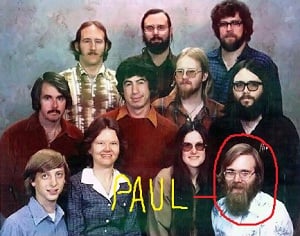
Interval Licensing, the company owned by Microsoft co-founder Paul Allen, is suing nearly every big name in tech - the lawsuit names AOL, Apple, eBay, Facebook, Google, Netflix, Office Depot, OfficeMax, Staples, Yahoo and YouTube as defendants, alleging violations of patents related to search, multimedia, database management and "screen activity" (e.g. pop-ups.)

No specifics just yet on exactly how each company violated the patents, but a release from Interval says they cover "fundamental web technologies first developed at Interval Research in the 1990s, which the company believes are being infringed by major e-commerce and web search companies."

The patents named in the suit include:United States Patent No. 6,263,507 issued for an invention entitled "Browser for Use in Navigating a Body of Information, With Particular Application to Browsing Information Represented By Audiovisual Data."
United States Patent No. 6,034,652 issued for an invention entitled "Attention Manager for Occupying the Peripheral Attention of a Person in the Vicinity of a Display Device."
United States Patent No. 6,788,314 issued for an invention entitled "Attention Manager for Occupying the Peripheral Attention of a Person in the Vicinity of a Display Device."
United States Patent No. 6,757,682 issued for an invention entitled "Alerting Users to Items of Current Interest."

"Interval Research was an early, ground-breaking contributor to the development of the internet economy," said David Postman, spokesman for Paul G. Allen. "Interval has worked hard to bring its technologies to market through spinning off new companies, technology transfer arrangements, and sales of its patented technology."

According to the Interval release:
Interval Research was founded by Allen, the Microsoft co-founder, and Liddle, who developed fundamental technologies in the 1970s when he worked at Xerox PARC. Interval was a preeminent technology firm, employing over 110 scientists, physicists and engineers. Interval also helped fund outside projects, including Sergey Brin's and Lawrence Page's research that resulted in Google.

Facebook has responded through a spokesman, saying the suit is without merit.

“This lawsuit against some of America's most innovative companies reflects an unfortunate trend of people trying to compete in the courtroom instead of the marketplace,” a Google spokesman said in a statement.

Allen lives in Seattle and is a noted philanthropist, having committed the majority of his fortune to charity. We're so confused...
Dani AI

Generated

A short, practical follow‑up to ’s thread and ’s note about the person involved: the enforcement effort that started with the 2010 filing did not produce a broad, sustained licensing win. Over several years the asserted claims were whittled down by reexamination and claim construction disputes, the Patent Trial and Appeal Board rejected some asserted claims, and later courts concluded the remaining claims could not survive modern §112/§101 scrutiny; the district docket was closed by stipulation in 2018. (law.justia.com)

Why that happened, in plain terms: (1) vague, subjective claim language is vulnerable to indefiniteness challenges (the Supreme Court requires claim scope to be clear to a person skilled in the art). (2) After Alice (the Supreme Court’s 2014 §101 framework), claims that merely recite “access, schedule, display” or other high‑level computer steps are often treated as abstract ideas without an inventive concept. The litigation here ran into both of those doctrines, and administrative review at the PTO also played a key role. (supreme.justia.com)

If the goal is to follow this case or learn from it, practical steps that work for anyone researching old patent suits: (1) read the district docket and final orders (Justia/CourtListener or PACER). (2) Read appellate opinions (Federal Circuit) for how claim terms were construed. (3) check USPTO/Patent Center or Google Patents for the patent file history and any reexamination/PTAB decisions. (4) when assessing a claim, look for subjective phrases or only generic computer recitation — those are common failure points today. Links to the primary records and opinions are available on the public dockets and opinion sites. (dockets.justia.com)

Bottom line: this is a useful case study in how modern claim‑construction, PTAB review, and Supreme Court §101/§112 decisions interact — and why broadly worded, subjective patent claims are a risky enforcement strategy. (law.justia.com)

Member Avatar for Member #949455
Member #949455

Allen lives in Seattle and is a noted philanthropist, having committed the majority of his fortune to charity. We're so confused...

He's not he only person who is suing, there's alot of people doing this too daily.

You left out that he owns a few American Sport Franchise:

Seattle Seahawks of the National Football League (NFL)
Portland Trail Blazers of the National Basketball Association (NBA).
He is also part-owner of the Seattle Sounders FC of the Major League Soccer (MLS).

He's a good investor.

Be a part of the DaniWeb community

We're a friendly, industry-focused community of developers, IT pros, digital marketers, and technology enthusiasts meeting, networking, learning, and sharing knowledge.