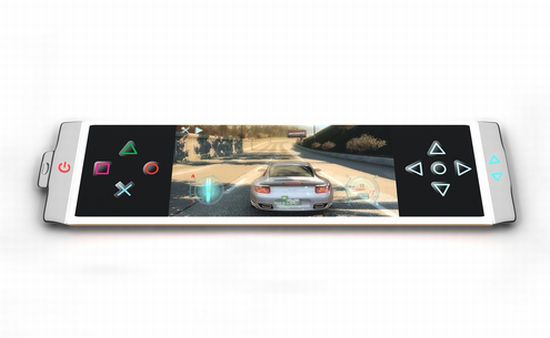
Philips Fluid Flexible Concept Smartphone Revealed

Glass_Joe 1 Tallied Votes 642 Views Share

It was only a matter of time before Hollywood's depiction of "the future" started to grow strikingly similar to something one would find in Best Buy's Sunday flyer.

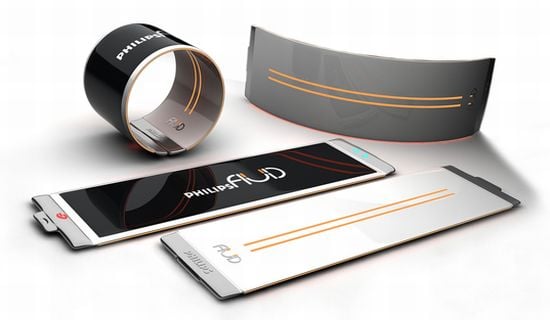
The Philips Fluid Smartphone was unveiled earlier today (August 18th), the first device since Doc Brown used banana peels and Miller beer in the Mr. Fusion Home Energy Reactor to get to the future that has made me laugh. Conceptualized by Brazilian designer Dinard da Mata, the phone is as every bit as pliable as the title suggests. With the use of an organic light emitting diode (OLED) screen, the phone can wrap into a bracelet around the user's wrist, allowing you to wear its functionality like it's a trendy designer fashion.

In truth, the phone looks like one of those "Slap Wrap" slap bracelets kids used to wear in the 90s, but is sure to be about 1981025 times more expensive. There is no word yet if the Fluid will be featured in exotic tiger stripes or rainbow patterns.

Aside from a variety of photos, little is known about the endeavor outside of it simply just existing. Granted modern electronics are a constantly evolving trend, it just seems like this phone is simply vying for the "What will they think of next?" reaction rather than contemplating "What will our users want?"

The phone leaves me asking three questions myself: What type of redeemable processing power and hardware could fit in this flexible chassis?
How could said lack of computing and functionality even compete with today's current market driven by Androids and iPhones with 30GB hard drives, HD 720p video cameras, etc.?
What market is this product even after? A-list celebrities morbidly obsessed with owning the hottest new trends? Runway models and fashion designers? People self-conscious about their fat wrists?
While more of a novelty than a novel idea at this point, time will only tell whether or not this design will invoke as much purpose as it does awe at its sleek design and pretty face.

Photos courtesy of The Design Blog
PCBrown commented: the future is now! +1

Dani AI

Generated

Good thread — raises the right skeptical points and captures the appeal. A short, practical framwork helps separate attractive concept art from a ship-ready product.

Modern “wrap” concepts usually trade raw performance and battery life for form. In real designs the heavy parts (CPU, camera optics, battery) are often kept on small rigid modules linked by flexible circuitry, because commercially viable fully flexible high‑performance chips and high‑capacity bendable batteries remain limited. That hybrid approach explains why many concepts look flawless in renders but ship with clear compromises.

Useful checklist for judging whether this is a novelty or a real phone:

  • Ask the maker for honest specs: bend radius and cycle rating, battery capacity (mAh) and expected screen‑on hours, SoC model and storage, camera module specs, IP/water resistance, and repair/warranty policy.
  • Confirm whether it is a standalone handset or a companion display that pairs with a smartphone; many successful wearables act as second screens rather than full replacements.
  • Consider UX issues: curved touch targets, typing, app compatibility and heat management — these are nontrivial and often drive real limitations.

Short answers to the big questions raised by : processing will probably be constrained or handled on rigid islands; matching mainstream slab phones on camera/video and battery life is unlikely until optics and energy storage improve; initial buyers are most likely fashion‑minded early adopters, not the mass market. Treat the concept as interesting until independent specs and hands‑on tests are available.

atrueresistance 0 Light Poster

:-) drool...

Glass_Joe 68 Junior Poster in Training

It's like something out of Demolition Man or The Fifth Element or (insert futuristic 90s action movie here).

Be a part of the DaniWeb community

We're a friendly, industry-focused community of developers, IT pros, digital marketers, and technology enthusiasts meeting, networking, learning, and sharing knowledge.