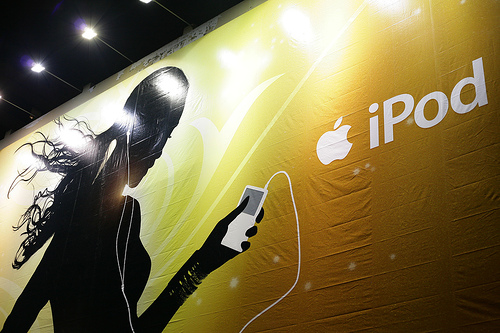
There has been a lot of talk the past couple of days about Apple's new ad network . The way it will work is that ads will live within the closed environment of the App Store apps. This supposedly means that that Apple will fully vet each ad it allows in the network and we users can happily click them knowing that we won't be getting spyware, adware, whateverware. Let's all hale the great and mighty Apple.
According to an article on ReadWriteWeb , some analysts are predicting a 4+ billion dollar a year business before it even launches. Before we get too far ahead ourselves here, let's keep in mind that ads are ads and it doesn't matter who validated them.
Do You Know Where Your Ad Has Been?
More importantly do you really care? In fact, most people don't click ads, and this TechCrunch article confirms that people on mobile devices (of which I will classify the iPad) are even less likely to click ads. So in the vast universe of ads, whether on the web or a mobile device, very few people actually click ads and mobile users even less. I'm left wondering how that translates into a multi-billion business.
Of course, Google ads generate billions and billions of dollars worth of revenue, so somebody has to be clicking them, right? Perhaps people don't realize they click ads because they don't recognize them as such. It's fairly easy for Google to hide the ads in the results, and perhaps Apple too will hide the ads by making them look and feel like the Apps themselves. In the examples cited at the announcement, Jobs made them sound more like mini Apps complete with interactivity and even games.
Will It Lower App Prices?
If there is trade-off like on TV for instance, users might be more willing to deal with ads. Perhaps, in the case of iPad and iPhone apps it would be a free versus fee trade. You can pay $5.99 for this ad-free app or you can get the one with ads for free. But just because Apple has blessed the ad, doesn't really matter much to me. I mean it's better than not having a clean set of ads, but ultimately it's not going to make much difference to the vast majority of users who never click ads regardless of their source. Perhaps this new generation of iAds will benefit from a curiosity factor early on, but once people realize what they're dealing with, I wonder if they will treat them any differently than any other ad.
Apple may very well end up making lots of money in this deal. They are giving 60 percent of the revenue to the advertisers, which is a very nice cut for them, but as for me. I don't care where the ad came from or who endorsed them or made sure they were virus free. To me an iAd by any other name is still an ad, and that's all the matters.
Photo by on Flickr. Used under Creative Commons License.