Is Google Sliding Further Into Social Games?

Updated CatRambo 1 Tallied Votes 860 Views Share

This Friday, Google will announce its acquisition of , for $182 million.

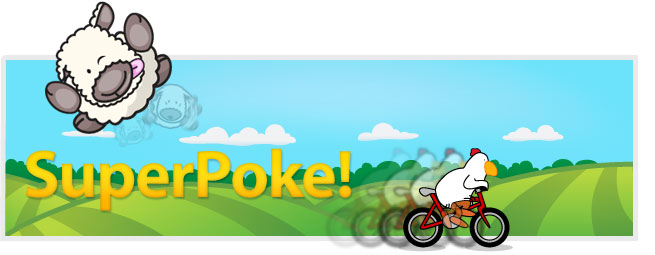
Earlier this year, Slide was named one of the ten most innovative web companies by Fast Company. If you've ever thrown a sheep at someone on Facebook, you've used a Slide product. The company, which says it's responsible for 100 SuperPokes a second, 5 million sheep thrown a day, and 100 spells cast per minute in its , began as a photo-oriented shopping service but has changed its business model a whopping five times , eventually morphing into a social-gaming site. The company was founded by Max Lechin , a co-founder of Paypal and Confinity, who's said he'd only consider Slide a success if it surpassed Paypal. He originally created the service, he says , so his wife could shop for shoes faster and thus spend more time with him. Levchin is also on the boards of Evernote and Yelp.

In 2008, the company was valued at $500 million , making its current selling price seem like a steal. The company is the largest video distributor on Facebook, via its branded , but its current focus is virtual goods, which made up three quarters of its revenue in 2009. Among its plans are developing ways for users to create and sell their own virtual goods, but it's unknown whether Google will encourage the company to continue moving in that direction.

The purchase is not the first move in Google's plan to develop what it's calling Google Games. Games produced by companies like Slide have contributed to Facebook's popularity, and Google would like to capture those addicts for themselves. The company reportedly invested over a $100 million in Zynga , the current leader in social gaming, in July. Zynga has done phenomenonally in its three years of existence, and projects at least a billion in revenue in 2011. Google's made other recent investments in Playdom and Playfish. Google Games is believed to be part of Google's plans to develop a social networking service . It remains to be seen how much sheep throwing will occur there.
[youtube]IZyl7SMDee4[/youtube]

Dani AI

Generated

raised the right question: Google did try to make a play for social gaming, but the follow-through was mixed and instructive for anyone building a social/virtual-goods business. Within a year of the Slide buy, several Slide consumer apps were closed and displaced players—many who had bought virtual goods—triggered a legal challenge (Abreu v. Slide) over lost in‑game purchases. (law.justia.com)

Google then shifted strategy from hosting Facebook‑style apps to offering platform services. Games appeared on Google+ in 2011, but by mid‑2013 Google retired Google+ Games and pushed developers toward Google Play game services (achievements, leaderboards, cloud saves, multiplayer)—a clear move toward cross‑device, app‑store distribution instead of browser/social‑platform games. (androidpolice.com)

Longer term, Google also wound down the consumer Google+ product after a privacy review under “Project Strobe,” acknowledging low engagement and API problems; the consumer service was shut down in 2019. That combination—product closures, platform pivots, and privacy-driven exits—shows how fragile third‑party platform dependence can be. (blog.google)

Practical takeaways for marketers and developers (building on points from and ):

  • Treat platform access as ephemeral: keep exportable records of purchases and server‑side account state rather than relying only on a host platform.
  • Spell out virtual‑goods terms and refund/closure policies up front; the SuperPoke fallout is a legal cautionary example. (law.justia.com)
  • Design for cross‑platform distribution (use Play Game Services or equivalent SDKs for cloud saves/achievements) so you can pivot between social surfaces and app stores. (developers.googleblog.com)
  • Measure retained value (LTV, retention, churn) rather than counting on viral hooks alone; diversify acquisition and owned channels (email, direct app installs).

This gives a concise, post‑mortem view: Google experimented with social games, learned hard lessons, and moved toward platform tools and mobile distribution—lessons still relevant for anyone selling virtual goods or relying on another company to host community and commerce.

jomesmoc 0 Newbie Poster

Google says that Google uses more services and the development of social consciousness of the ability of our members through the web ..

netvani -3 Junior Poster in Training

I read some articles about Google as social media. Maybe Google thinks of how they can get in touch more often and in much longer time to their audience. And what Facebook is currently doing is to build games for more entertainment. Perhaps those are the reasons behind and now Google launches its social games.

Be a part of the DaniWeb community

We're a friendly, industry-focused community of developers, IT pros, digital marketers, and technology enthusiasts meeting, networking, learning, and sharing knowledge.