Google Keeps On Buying, This Time It's Going Gold

Updated CatRambo 0 Tallied Votes 788 Views Share

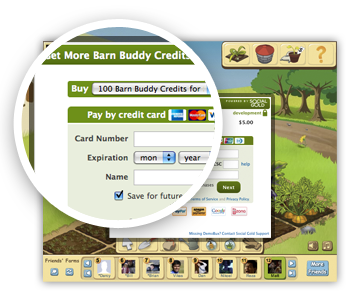
Yet , this time , the producer of Social Gold, a payment product that allows developers to build a payment system directly into their applications. The purchase price is a rumored $55 million dollars, with an additional sum on earnout.

Founded in 2006, San Francisco-based Jambool is the brainchild of Vikas Gupta , a former Amazon employee whose creations include the Send Good Karma and Hug Me apps. Jambool's Social Gold provides three APIs: Virtual Currency, with which developers can create virtual currencies for transactions and payments in virtual economies; Payments, which handles virtual transactions; and Subscriptions, which provides functionality for allowing users to subscribe to an application or website. Social Gold does not sell its product, but leases it, taking 6-10% of transactions in fees. Current clients of Social Gold include Playdom, Games2Win, Tagged, and Avatar Reality. Earlier this year the company was an winner in the "Enabling Tools and Devices" category.

The purchase reveals something of what Google sees as important for the future. Currently many gaming companies are seeing significant revenue from the sale of virtual goods, and Google's invested or bought into some of the major players, such as Zynga and Slide.

Virtual goods usually fall into one of three categories: gifts that can be sent to other users, decorative goods that allow a user to personalize a virtual space, and functional goods, which provide enhanced functionality such as a power-up in a game. Jeremy Liew of Lightspeed Venture Partners estimated Zynga's 2010 revenue will be $240 million in 2010 - most of it from selling virtual goods.

Google's been on a buying spree lately, signaling a major push into the social network space. What's next on their list? Given the rate at which purchases are being made, we don't have long to wait to find out.

Dani AI

Generated

Short, practical add-on for the thread by (and a nod to ): when platform owners move into payments, the immediate impact for developers is less about headlines and more about operations — choose integrations, protect payments data, and instrument monetization so a change of vendor does not break revenue. Google’s developer-facing in‑app payments work is a useful example of how platforms push for low‑friction checkout inside apps. (developers.googleblog.com)

Quick checklist developers can apply right away:

  • Pick the right integration: platform in‑app billing reduces friction and shifts many responsibilities to the store, while third‑party gateways give more control over pricing, settlement and user relationships. Read the platform billing rules and technical flow before you build. (developer.android.google.cn)
  • Avoid handling raw card data: use hosted fields, client‑side tokenization or a PCI‑validated processor so card numbers never touch your servers — this greatly shrinks PCI effort and risk. (stripe.com)
  • Implement server‑side purchase validation and fraud rules (receipt verification, rate limits, behavioral signals). Many payment providers include fraud tooling that complements analytics. (stripe.com)
  • Instrument monetization as business events (first‑purchase conversion, ARPDAU/ARPPU, cohort LTV) and run small A/B pricing tests before rolling offers wide. Concrete metrics let you spot regressions if you migrate providers. (docs.gameanalytics.com)

Operational notes: keep exportable settlement reports, define clear refund/chargeback workflows, localize pricing/taxes, and keep a fallback payment path. Preparing for vendor change and minimizing PCI scope are the two fastest ways to protect revenue if a platform or provider shifts strategy.

marshal_ramdev -3 Junior Poster

great news man .. i though gwallet is new but he is just coping stuff lol

Be a part of the DaniWeb community

We're a friendly, industry-focused community of developers, IT pros, digital marketers, and technology enthusiasts meeting, networking, learning, and sharing knowledge.