Gorilla Glass: The answer to fragile TV screens?

b10hzrd 1 Tallied Votes 497 Views Share

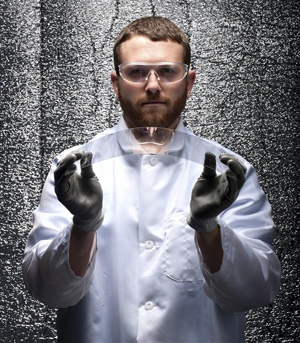
The Nintendo Wii has introduced many families to the joy of gaming and has also introduced others to the fragility of modern television screens. Today’s flat panel TV’s are thin, sexy and unfortunately rather fragile, a fact we have been forced to live with, until now. Corning Inc. claims to have the answer we have all been hoping for, Gorilla Glass . Gorilla Glass is roughly two to three times stronger than the standard chemically treated versions of common soda lime glass, an attribute bolstered by the fact that the increased strength is present even when the Gorilla Glass is half as thick as its soda-lime competitors. Corning’s not done there, not only is the product flexible (as witnessed in the photo below from Corning Inc.) but is can also be produced in sheets thinner than a dime.

While most tech news is of a company’s latest breakthrough or pre-launch product, Gorilla Glass has actually been around since 1962, simply waiting for the right application and that initial application was the mobile phone market. Corning is not at liberty to discuss all of it customers, however they do report it’s use in over 100 devices, including the recent Motorola Droid smart phone.

Corning see’s a large market in the flat panel TV industry, as evidenced by their recent commitment to increase production capacity. To accommodate the increase in demand, Corning has announced that they will be investing approximately $800 million to construct a new glass substrate facility in China. Corning Inc.’s Chairman and CEO Wendell P. Weeks stated:“The need for additional Gorilla glass capacity is based in part on the product’s new application as a TV cover glass,” Weeks explained. “Gorilla glass has already been embraced by information technology and handheld device makers, and the addition of the TV cover glass application creates a tremendous opportunity for further growth.”

Gorilla Glass would allow TV manufacturers to forgo the bezels around the screen and instead allow a more elegant, borderless design, while simultaneously providing enhanced durability and scratch resistance for an estimated consumer-level cost increase of $30 to $60 per set. No longer will the joy of Wii-gaming have to be tempered by the concern that one overly ambitious game of Wii bowling by a fumble-fingered friend end in TV-tragedy.

The full press release can be viewed .
Dani AI

Generated

A short, practical addendum that clarifies what Gorilla Glass does (and doesn’t) and ties the 2010 thread points together. As flagged when Corning first pushed TV cover glass, Gorilla Glass is a chemically strengthened aluminosilicate: an ion‑exchange step (larger potassium ions replacing smaller sodium ions in a hot salt bath) builds a compressive surface layer that makes the face harder to nick and helps stop small flaws from growing. That same compressive layer, however, can be breached by deep gouges or edge damage, after which fracture propagates quickly. (wired.com)

What that means for TVs versus phones: the material’s thinness and scratch/impact advantages fit handhelds and some monitors well, and Corning kept improving generations for mobile devices. A few premium TVs did ship with glass-front designs using chemically strengthened glass (Sony’s higher-end BRAVIA series is a documented example), but wide adoption across all consumer TV lines was limited by large-sheet manufacturing, optical coatings, edge handling and cost trade-offs—so the “one glass fixes everything” outcome didn’t fully materialize. ’s iPhone example shows where the tech found its biggest, sustained market. (twice.com)

For households worried about gaming damage (and echoing ’s Gorilla‑Tape humor): prevention beats reliance on a single material. Anchor or wall‑mount the set and use an anti‑tip kit (CPSC guidance), place controllers and remotes away from the screen, and consider a purpose‑made TV screen protector (tempered‑glass or PET film) if the set sits in a high‑risk spot. These are low‑cost, practical steps that avoid the repair/replace dilemma if a large panel is damaged. (cpsc.gov)

Bottom line: Gorilla Glass improved display durability and found many mobile uses, and it helped some premium TVs, but it isn’t a universal cure for fragile flat panels. For real value, combine a tougher cover glass (when available) with mounting, placement and a screen protector to reduce the odds of a game‑time catastrophe. (wired.com)

H. B. Duran 5 Newbie Poster

If this is anything like Gorilla Tape, which is currently holding my side view mirror on my car...then I'm sold! :-)

SuzieDsouza 0 Newbie Poster

The Gorilla Glass worked out so well for the new iPhones why not put it in the living room, I'm sure it will add nothing to the cost of already overpriced sets.

Be a part of the DaniWeb community

We're a friendly, industry-focused community of developers, IT pros, digital marketers, and technology enthusiasts meeting, networking, learning, and sharing knowledge.