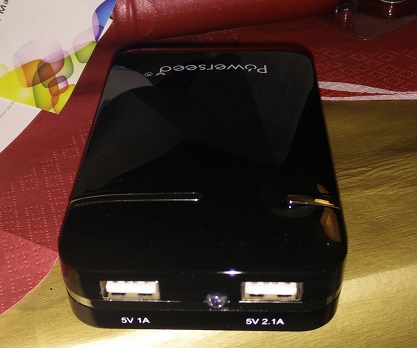
Hello guys, I wonder if you can help me at all. I have received a battery charger pack (6000mAh) for mobile phones, tablets and cameras, here is a screenshot of it
2bf1d890310c83236eb46f24619d9e6c
It has several connectors and can charge differend brands like apple android etc. OK, so I have a OPO device with android (battery 3100mAh), and I'd like to use the battery pack to charge it but as you can see from the picture it has 2 outputs: 5V 1A and 5V 2.1A. Unfortunately electronics isn't my thing, so I had a look on google but frankly I got more confused than before, and read that i need to make sure I use the right voltage otherwise I screw the phone battery: so, my question is, which output should I use with my OPO phone, and, more generally, which output is used for which device? Is there a rule of thumb of some kind?

Dani AI

Generated

Short practical summary and a few checks that add to what , and already said.

Phones decide how much current to accept by detecting the charger on the USB data lines (and by internal charger circuitry), so the pack only offers capability — the phone’s electronics pick what to draw. That detection/limit behavior is implemented in charger ICs and is the reason a “tablet” port will charge a phone faster only if the phone recognises the port. (digikey.tw)

How to confirm what your phone will accept (safe, non‑technical steps):

  • Look up the phone’s official spec / support page for charging or “fast‑charge” details.
  • Use an Android app like Ampere or AccuBattery to get a quick, practical estimate of charging current (small caveat: readings can change if the screen is on, so check with the screen off). For exact numbers, use an inline USB power meter between the pack and phone. (play.google.com)

About under‑/over‑charging and battery health:

  • Modern phones use CC/CV charge algorithms and battery management so they stop top‑up current when the cell is full; “overcharging” is not something to panic about, but heat and very high charge rates accelerate wear. Battery makers generally recommend modest C‑rates for longevity and explain the CC/CV behaviour and fast‑charge tradeoffs in detail. (batteryuniversity.com)

Practical tips you can apply now:

  • Use the shorter, good‑quality cable you have (thin/poor cables cause voltage drop and slower charging).
  • If you want multiple full charges from the power pack, remember its mAh rating is for internal cells (at ~3.7 V); usable 5 V output energy is lower after conversion losses, so expect fewer full phone charges than the sticker implies. For precise diagnosis, measure with a USB meter while the phone is below ~20% and the screen is off. (batteryskills.com)

If anything feels unusually hot, stop and try the other port/cable — heat is the real warning sign.

Recommended Answers

All 6 Replies

They are both 5 volts. One will provide a higher current, hence shorter charge time, than the other. The only thing you need to verify is what the maximum charge rate (amperage) is that your device supports. The 1Amp rate should be safe for everything. The 2.1Amp rate may not be.

Well, yup i scorrect over here both of then are 5v one will send the charge out faster means faster chanrging while with the other one it will take a little more time to ...

thanks, so how/where do I check the maximum charge rate?
Also, I've heard about underchargin and overchargin and problems that they could cause to batteries, is that true?

Well, I would say don't worry much about the overcharging problem because modern batteries have inbuilt circuit which prevents the device from overcharging and what does checking the charging rate means over here ?? I would say its already written at the USB ports i.e 5 and 2.1 ...

When charging via a dedicated power supply or USB you do not need to worry about the battery voltage and supply voltage output, as long as the current supply capability of the source is high enough. All chargers in devices such as your OPO are "smart" in that they will control the charging rate via voltage applied to the batteries themselves. The battery fully charged voltage may be 1.2, 1.5, 3.0, 3.6.... you don't need to concern yourself about it. It may even be higher than the 5V USB supply - a boost circuit would take care of that.
3100mAh... say 20% of that for a quite safe charging rate is equiv to just .62A => 5 hours roughly.

cool thanks guys

Be a part of the DaniWeb community

We're a friendly, industry-focused community of developers, IT pros, digital marketers, and technology enthusiasts meeting, networking, learning, and sharing knowledge.