Hi All,
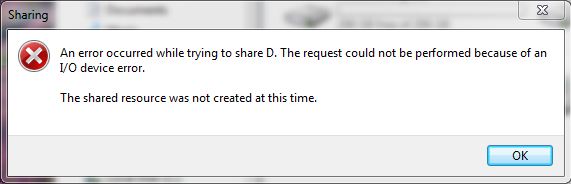
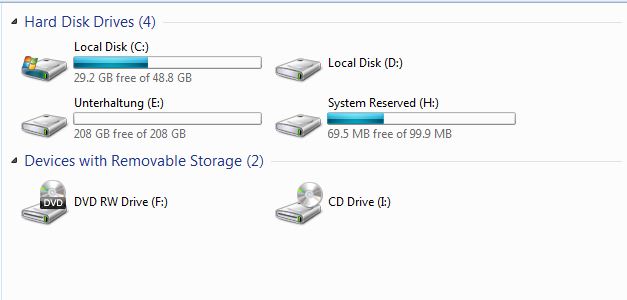
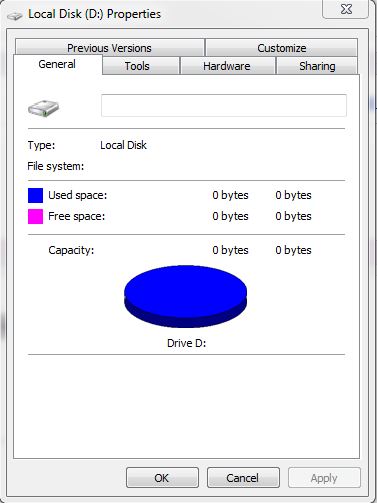
Am not able to access my D drive. Am getting the I/O error while accessing it. Please help me as I have all my files on this drive. Am using Windows 7. Please find the screen shots for reference.
Hi All,
Am not able to access my D drive. Am getting the I/O error while accessing it. Please help me as I have all my files on this drive. Am using Windows 7. Please find the screen shots for reference.
Given the screenshots and the I/O errors, the D: volume is not being mounted by Windows and the partition entry appears to be missing — a pattern that usually means partition-table corruption or an early-stage hardware problem. correctly clarified this is an internal partition; ’s CLI checks show the OS cannot read the filesystem; ’s recommendation to image the disk first is the safest priority and should be followed before any repair attempts that write to the drive.
Key precautions: stop any further attempts to write to the affected disk (avoid Windows repair utilities that modify the volume). If the drive is making unusual noises, further software attempts risk permanent loss and a professional recovery service should be contacted. If no mechanical symptoms exist, use a read-only environment (a Linux live USB) so diagnostic and imaging tools can run without Windows altering the disk.
Recommended, practical workflow (examples assume a Linux live session and an external backup target with enough free space):
Collect SMART info to assess hardware health:
smartctl -a /dev/sdX Create a sector-by-sector image while preserving a read/write log (GNU ddrescue is designed for this):
ddrescue -f -n /dev/sdX /media/backup/disk.img /media/backup/disk.log
ddrescue -d -r3 /dev/sdX /media/backup/disk.img /media/backup/disk.log Work only on the image: mount it read-only to inspect, and run a partition/table recovery tool against the image (TestDisk is commonly used for partition recovery):
mkdir /mnt/image
mount -o loop,ro disk.img /mnt/image
testdisk disk.img If partition-table repair is successful, copy recovered files from the image to another healthy drive. If not, file-carving (PhotoRec or equivalents) can extract many files but usually loses original folder structure and filenames. If SMART shows failing sectors or imaging repeatedly fails, stop further attempts and consult a professional data-recovery service — continued DIY work can reduce the chance of full recovery. This plan supplements earlier replies while focusing on safe, evidence-preserving steps to maximize the chance of recovering data.
Jump to Post— Ancient Dragon 5,243Is that an external hard drive? Or is it a partition of the internal drive?
Jump to Post— Lucaci Andrew 140Here are some troubleshot advices:
Aditionally, open a command window (start-run-cmd) and type this:
C:\>cd D:\than
C:\>d:If you did connect to the hardware type
lsordir…
Jump to Post— Reverend Jim 6,665Can you post a picture of the disk management console? You can run it from
diskmgmt.msc
Is that an external hard drive? Or is it a partition of the internal drive?
Here are some troubleshot advices:
Aditionally, open a command window (start-run-cmd) and type this:
C:\>cd D:\
than
C:\>d:
If you did connect to the hardware type ls or dir in order to see if the OS recognizes your files:
D:\>dir
Can you post a picture of the disk management console? You can run it from
diskmgmt.msc
Hi Ancient Dragon,
It is a partition of internal drive.
Thanks in Advance.
Hi Lucaci Andrew,
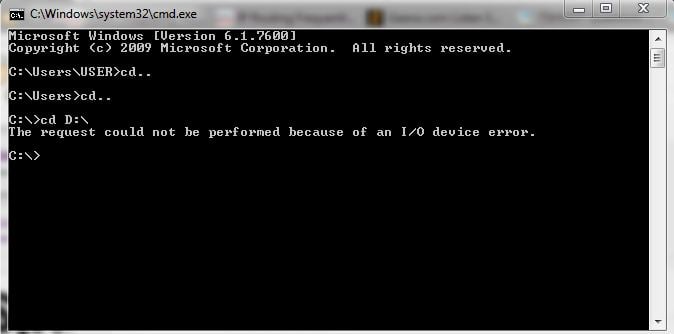
Please find the screen shot.
I tried to enter into D drive using CLI mode but again the error is throwed.
Hi Reverend Jim,
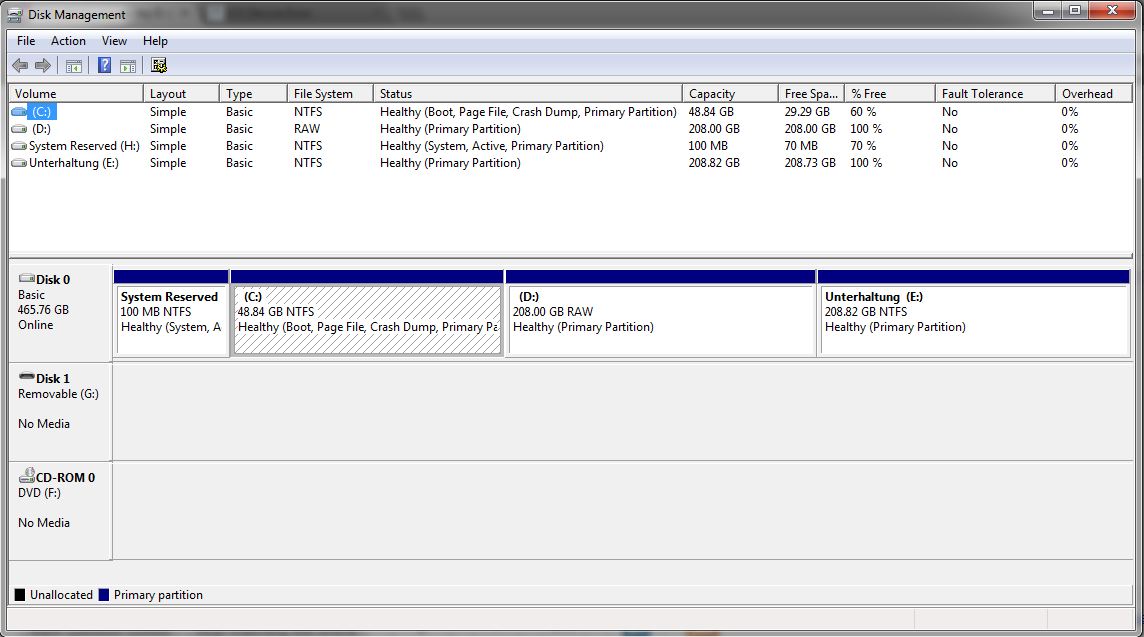
Please find the post of disk management that you asked.
Thanks in Advance.
Regards,
Cyril
Hi Reverend Jim,
It seems like the data in D drive is lost from the diskmgmt snapshot.!!
Please let me know.
That doesn't look good. My only suggestion at this point is to make a complete image of your disk (in case the next step screws everything up), then download and burn a gparted CD. Boot off that and see if you can use the partition table editor to manually put in values for the D partition. This might get you access to D in order to copy the files off (that is if the data has not been overwritten). Have a look at this before doing anything.
I've also just found MiniTool® Partition Wizard Home Edition 7.8 from another thread. I suggest you try this first.
We're a friendly, industry-focused community of developers, IT pros, digital marketers, and technology enthusiasts meeting, networking, learning, and sharing knowledge.