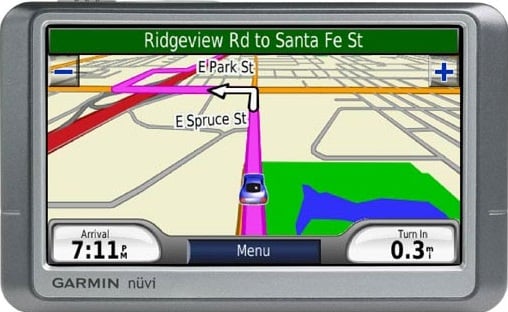
If the woman with the British accent suggests you turn left to find a fire hydrant, heed to her warning.
Earlier today (August 25th), GPS maker Garmin announced a voluntarily recall of 1.25 million nüvi GPS systems worldwide due to a faulty third-party battery which causes certain models to overheat when interacting with the circuitry. Roughly 800,000 of these recalled units were purchased in the U.S.
From the Garmin site regarding the issue:
[INDENT]Garmin is voluntarily recalling certain nüvi devices that contain a specific battery that was manufactured by the battery supplier within a limited date code range. Garmin has identified potential overheating issues when certain batteries manufactured by the third-party battery supplier within a limited date code range are used in certain Garmin nüvi models with a specific printed circuit board (PCB) design. It appears that the interaction of these factors can, in rare circumstances, increase the possibility of overheating, which may lead to a fire hazard. Although there have been no injuries or significant property damage caused by this issue, Garmin is taking this action out of an abundance of caution.
The recalled devices include a small subset of the following nüvi model numbers:nüvi 200W, 250W, & 260W
nüvi 7xx (where xx is a two-digit number)
You can determine your nüvi model number by looking at the label on the back or bottom of your nüvi.[/INDENT]
Recalls have been all a flutter in 2010. In May, Targus, a maker of laptop cases, bags, and accessories, recalled 507,000 of their laptop power adapters after eight incidents of consumers being burned by scolding interchangeable tips. Also in May, HP expanded to its battery recall model list, adding Pavilion and Compaq Presario units consumers purchased between August 2007 and May 2008. Most recently, Sony announced a recall on 535,000 of their Vaio F and C series laptops after it had been reported by 30 owners that their notebooks had overheated to the point of warping the chassis. The incident was caused by a faulty heat-monitoring chip, later fixed with a BIOS firmware upgrade.
While only 10 nüvi units have so far reported problems due to the overheating, the decision to nip the issue in the bud could have saved the company from potential media ruin. Garmin intends on repairing the defective devices by placing a spacer between the battery and the PCB. The third-party battery supplier, who Garmin has kept anonymous, will split the replacement battery pack costs and fully front all other expenses brought on by the recall program.
To determine if a unit is affected, customers can visit www.garmin.com/nuvibatterypcbrecall . Owners of faulty devices will be able to return their products free of charge.