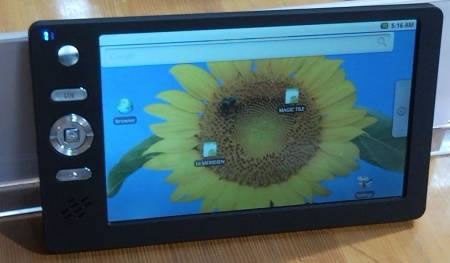
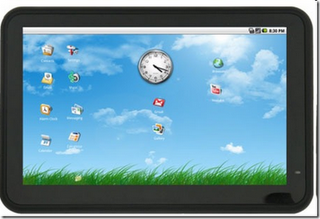
India released a Rs.1,500 ($30) laptop / Tablet PC for students and teachers in colleges and Universities. The device is currently not available for sale in the market as government has decided to launch it for students in 2011.

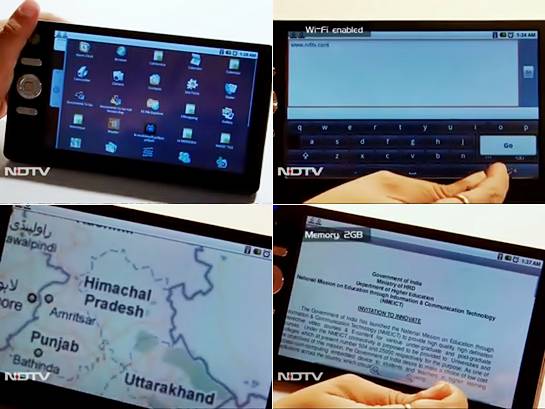
The price of this device (so called laptop) may even go below to Rs.1500 in future. This revolutionary laptop supports multimedia content, Zip-Unzip feature, PDF Reader, SciLab, OpenOffice and a browser for social networking websites like Facebook and Myspace but still not confirmed if we can use it as a gaming device.

Specifications:

Display: Touch Screen
Keyboard: Built in
RAM: 2GB
Connectivity: Wifi, USB
Operating System: Linux
Power: 2 watt
It has single unit system which has a touch screen.
It has a keyboard which is in-built.
It is operated by a 2 watt system so that it can even perform in areas where power supply is low.

Features:
Video web conferencing facility,
Multimedia content viewer for example pdf, jpeg, zip, etc,
Computing capabilities such as Open Office, SciLab and
Internet browsing with flash plug-in, JavaScript.
It is enabled with a touch screen.
An in-built keyboard is attached with this laptop.
The laptop can store the data of up to 2 GB memory. It is a RAM memory.
Wifi connectivity and USB port are this laptop’s additional features.
2 watt system is used up by this laptop so that it can even perform in areas where power supply is low.
Linux system is programmable in this laptop.

wiki Link :http://en.wikipedia.org/wiki/Sakshat
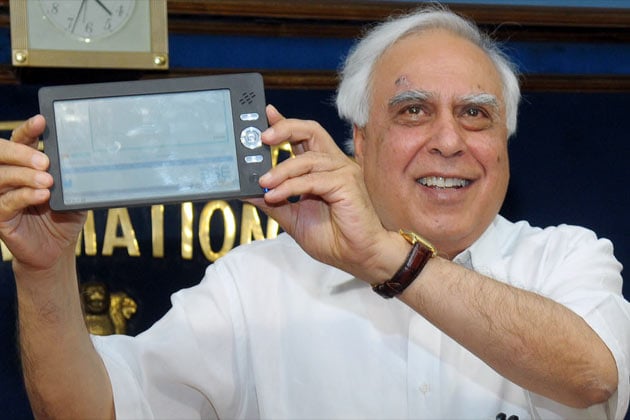
video :
http://www.youtube.com/watch?v=ytIKIGRW7j0&feature

Dani AI

Generated

A brief, factual update on the “Sakshat / $35” thread: the early prototype and government program that described was rebranded and launched as the Aakash initiative rather than remaining “Sakshat.” The original HCL tender ran into problems and was re‑tendered before a production model was publicly unveiled in October 2011. (economictimes.indiatimes.com)

What actually reached students and the market differed substantially from early claims. The production run was handled by DataWind (branded Aakash / Ubislate), and the government procurement price ended up around the mid‑Rs.2,000s with subsidised student pricing; commercial retail variants sold for higher (Rs.2,500–2,999 at launch). The first government units were very basic (7" resistive screen, low‑MHz ARM core, ~256 MB RAM, Android 2.x), so real‑world performance and battery life were limited compared with mainstream tablets even at the time. (tech.hindustantimes.com)

The rollout faced quality, testing and logistics issues. Early batches were disputed by the testing institute, deliveries were delayed, pre‑orders piled up and IIT Bombay later became the executing body; penalties and public criticism followed as supply and quality shortfalls came to light. That background explains why the simple “Rs.1500/$35 — ready to buy” story did not materialise as advertised. (indianexpress.com)

Bottom line for readers arriving later: the project was a useful policy experiment but shows that low hardware cost alone does not deliver educational outcomes — software, content, connectivity, support and a reliable supply chain matter as much. For any current deployments, prioritise devices with a recent OS, local warranty/support and a clear plan for content and connectivity rather than chasing headline price numbers. The intent behind the project — praised by — was important, even if execution was uneven. (wired.com)

Hi Sandeep, it will be the cheapest tablet in the world. Congratulations to IIT team who have developed it.

Be a part of the DaniWeb community

We're a friendly, industry-focused community of developers, IT pros, digital marketers, and technology enthusiasts meeting, networking, learning, and sharing knowledge.