Am new to inside computer works. know all there is to know about software, but hardware is another story. I recently purchased a Serial ATA hard drive, and went to install it, but the cable inside the computer had a different connector on it.

From reading on different sites, I see serial ATA vs. IDE. IDE is the type of cable in my computer. What do I have to do, to install this hard drive as a slave inside my computer. Thank you for any help.
Dani AI

Generated

Practical notes expanding on 's replies and 's original question — a compact, practical checklist and troubleshooting guide for installing a Serial ATA drive.

SATA basics: SATA is point‑to‑point (no master/slave) and uses a thin L‑shaped 7‑pin data plug plus a 15‑pin power plug. A SATA drive needs its own data cable to a motherboard SATA port or to a SATA controller card; it also needs a SATA power lead from the PSU (or an adapter if the PSU lacks one). Physically mount the drive in a 3.5" bay or adapter bracket, taking care to avoid sharp bends in the cable.

Quick install checklist:

  • Power off and unplug the PC and discharge static before touching components.
  • Secure the drive in a bay, connect the 7‑pin SATA data cable to the drive and to an available SATA port on the board or controller card.
  • Connect the 15‑pin SATA power connector (or use a Molex‑to‑SATA power adapter if required).
  • Boot to BIOS/UEFI to confirm the drive is detected and set boot order if it will be a system disk. Enable the SATA controller or set AHCI/compatibility mode as needed.
  • If the drive is for data only, initialize/partition/format it inside the OS (Disk Management on Windows). If planning to install an OS on it, older installers (Windows XP era) may need controller drivers during setup or require the controller to be set to IDE/compatibility mode.

Troubleshooting pointers:

  • If the drive is not seen: verify power (drive LED/spin), swap the SATA cable or port, and confirm SATA is enabled in BIOS.
  • If the drive is seen in BIOS but not the OS: check drivers, then initialize/partition the disk.
  • For systems without onboard SATA: choose a controller card with documented BIOS/boot support if a bootable SATA disk is desired; cheap cards may require drivers and sometimes are non‑bootable.
  • Passive IDE<->SATA adapters exist but are often unreliable for booting—use them only for temporary transfers.

Final note: returning the drive for an IDE model is reasonable if avoiding extra cost and complexity; otherwise a correctly chosen controller card will let the SATA drive work.

Recommended Answers

All 6 Replies

Hi, and welcome to DaniWeb.


First thing you need to do is ensure that your system is suitable for SATA hard drives. The motherboard needs to have a SATA controller onboard, and have sockets for the SATA drive cables. If it doesn't have those features then you will need to also purchase a SATA controller add-in card.

If the SATA sockets are already provided you may need to enable the feature in BIOS Setup.

You will need a SATA drive cable, which can be purchased from a computer store.

If your power supply unit does not already have a suitable power connector you will need to purchase a 'molex to SATA converter cable'.

That's it, really. Different data cable (SATA drives attach one drive per cable, rather than 2 as with IDE. There is no Master and Slave drive arrangement.) Different power connector, so an adapter if necessary. A controller card if it isn't onboard SATA. (Or swap the drive for an IDE one if you've purchased the wrong drive and don't want to spend more money.)

First thing you need to do is ensure that your system is suitable for SATA hard drives. The motherboard needs to have a SATA controller onboard, and have sockets for the SATA drive cables. If it doesn't have those features then you will need to also purchase a SATA controller add-in card.QUOTE]

Hate to sound stupid here, but what exactly does a SATA controller look like on the motherboard. If it doesn't I will purchase the SATA add-in card. I just need to know what to look for.

Thanks

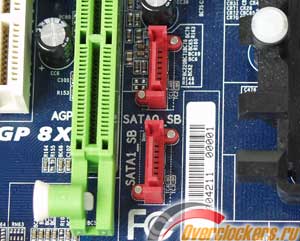
You don't need to look for the controller. If it's onboard SATA the controller will be in the motherboard chipset. If the system can already accept SATA drives you need to look for the SATA drive sockets. They will look like this, although they will probably be a different colour:


[img]http://www.overclockers.ru/images/lab/2004/08/19/sata.jpg[/img]

If your PC doesn't already have SATA connectors, you should seriously consider taking the drive back to where you purchased it from and swapping it for an IDE drive. A SATA controller card is not an ultra cheap component, and the drive itself will give you negligible performance difference to an IDE drive. If the system isn't suited to it, and you are able to swap it, there's really no point to keeping it ;)

thank you for your help. My comp does not have the SATA on the motherboard, as I feared. I will send the drive back and find one that will work on my comp. Thank you for all your help.

When looking to purchase another drive, any IDE drive will work? That being ultra ATA133, and such?

Yes, it should be fine. Unless the PC is a pre 2001 or thereabouts system it will almost certainly have at least an ATA100 controller. Slower controllers will operate the drive, but at the lower data transfer rate of course.

If your system is a rather old one, you may encounter 'drive capacity limits' which mean that the full capacity of the drive is not recognised in BIOS. If this happens you will need to use the software tools downloadable from the drive manufacturer website to install the drive and enjoy its full storage capacity.

See this article:
http://www.pcuser.com.au/pcuser/hs2.nsf/web/BD3EA22FE38D2CD6CA257056002B017F

Be a part of the DaniWeb community

We're a friendly, industry-focused community of developers, IT pros, digital marketers, and technology enthusiasts meeting, networking, learning, and sharing knowledge.